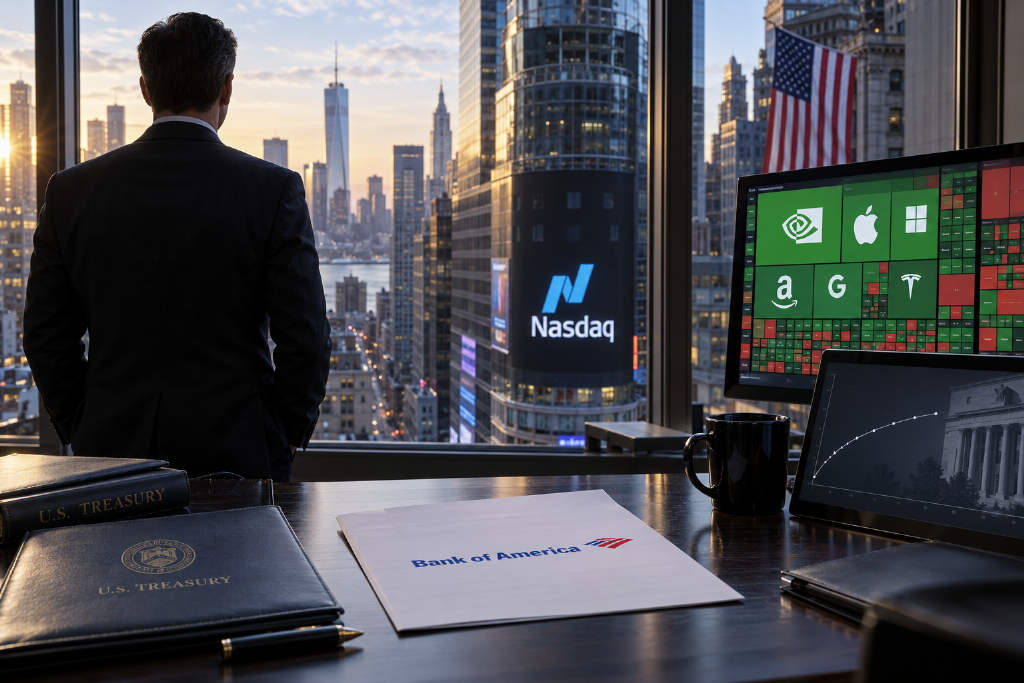
Bank of Ameri2026-10-04 02:31:40BofA warns current AI-driven market concentration resembles the run-up to the 2000 tech bubble peakBank of America strategist Michael Hartnett said in the latest edition of "Flow Show" that the current structure of the U.S. equity market looks strikingly similar to the period just before the 2000 dot-com bubble peak. He pointed to a market split in which AI-related trades and mega-cap technology stocks continue to lead while much of the rest of the market remains under pressure. Hartnett said investors are long AI assets represented by the Nasdaq 100 and the Magnificent Seven, while shorting areas with lower AI exposure such as the S&P 500 equal-weight index, adding that the "1999 analogy still holds." He also described AI as the "biggest bubble since railroads," while noting key differences between the two eras, including rising semiconductor prices today and the lack of support from falling Treasury yields. Hartnett said the U.S. 10-year Treasury yield has climbed to 5.33%, the highest since 2002, and proposed a "buy humiliation" trade in bonds. He also flagged four market warning levels tied to IXG, MOVE, MDY and IJR, while BofA’s bull-and-bear indicator slipped from 9.3 to 8.8 but remained in "sell" territory.40
OKX2026-10-01 07:09:52OKX posts 54.709 billion USDT in 30-day turnover for US equities productsOKX said its US equities-related products recorded 54.709 billion USDT in trading volume over the past 30 days, based on market data as of Sept. 30, 2026. Stock perpetuals accounted for 53.328 billion USDT, while spot trading contributed 1.381 billion USDT. The most active names over the same period were SNDK, SOXL, and SKHYNIX. OKX also said storage remained the hottest segment during the past 30 days, pointing to sustained interest in semiconductor-linked trading activity across its US stock product lineup.40
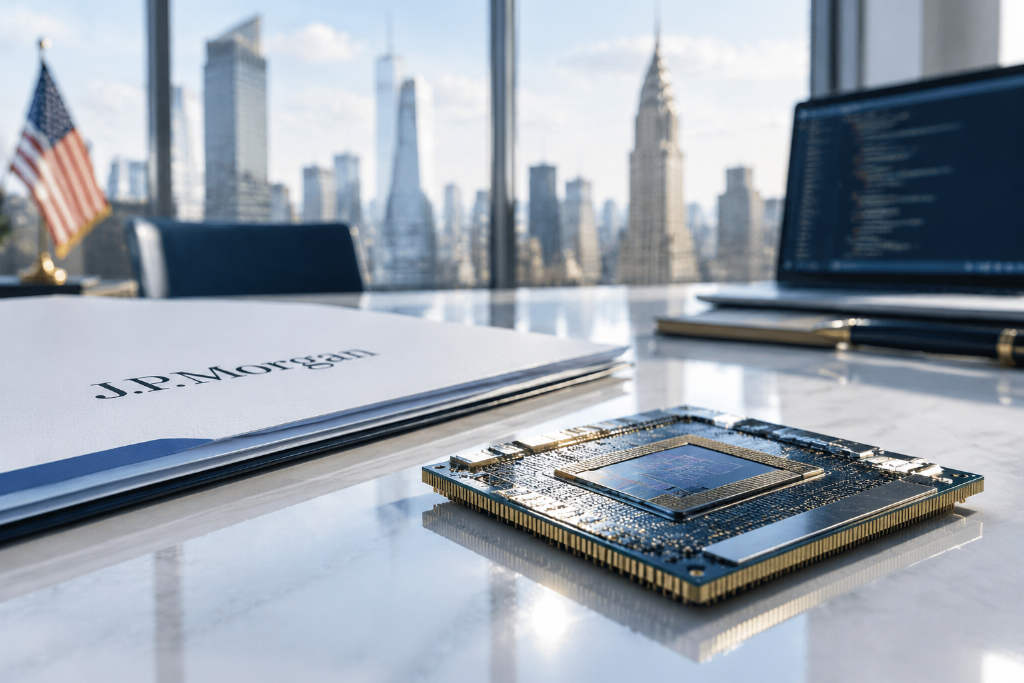
JPMorgan2026-09-30 03:30:59JPMorgan says tech valuation reset is largely done, favors semiconductors over softwareJPMorgan said in a Sept. 28 equity strategy report that the valuation reset across much of the technology sector has already gone a long way, leaving positioning cleaner while earnings momentum and the capital spending cycle remain intact. The bank said the tech and AI ecosystem had stalled for three months from June through last week, but valuation compression in most areas had become significant enough to justify re-engaging with the sector. The report, summarized by TechFlowPost and attributed to analyst Mislav Matejka, draws a sharp distinction between semiconductors and software. JPMorgan said forward earnings for semiconductors have continued to move about 30% higher, while software has seen almost no earnings upgrades. It therefore recommends re-entering the semiconductors-over-software relative trade. The bank also said the so-called Magnificent 7 now trade at their cheapest valuation level in a decade, nearly one standard deviation below the broader market, while hyperscaler earnings growth should help support performance after an estimated 8% underperformance this year. JPMorgan also argued that the AI capex upcycle remains intact, with hyperscaler capital spending projected to grow at a 28% CAGR through 2030. It added that agentic AI could materially shift infrastructure demand by moving CPU-to-GPU ratios from roughly 1:4 to 1:8 in traditional large language model setups toward 1:1, or even more in favor of CPUs.230
BP2026-09-27 08:52:32BP nears $1.5 with a 22.2% gain over 24 hoursBP climbed to nearly $1.5 on Sept. 27, with market data showing the token at $1.479 at the time of reporting and up 22.2% over the past 24 hours, according to BlockBeats. The move was tied to recent momentum around what the report described as a positive catalyst: the U.S. Securities and Exchange Commission approving limited trading of tokenized stocks on on-chain platforms. BlockBeats also pointed to a July 10 announcement from Backpack, which said it had launched a 24/7 market for real U.S. equities aimed at international investors. Eligible users, the company said, can buy, sell, and hold actual U.S. stocks around the clock rather than synthetic derivatives. Backpack added that the platform offers true equity ownership, draws on liquidity from traditional trading venues, and supports instant settlement, continuous price discovery, and settlement in both fiat currencies and stablecoins.260
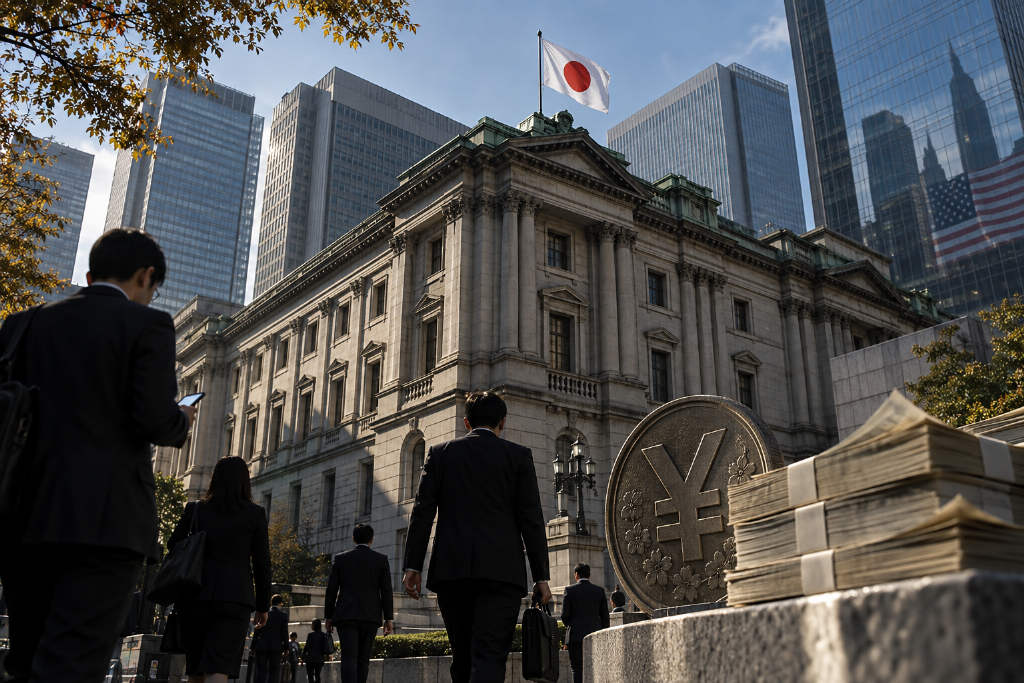
yen carry tra2026-09-21 13:01:04Yen carry unwind risk eases for now, but US asset weakness remains the main triggerThe Bank of Japan raised rates in September as expected, but the move landed below the market’s more aggressive expectations, easing immediate pressure on global markets. According to the report, that softer-than-feared outcome, together with steady US August nonfarm payrolls and lower oil prices, helped limit the spillover. Asia-Pacific equities rose broadly after the decision, while the yen weakened further once the hike was delivered. The piece argues that a disorderly unwind in yen carry trades still requires three pressures to hit at once: higher yen funding costs, a sharp and rapid rise in the yen that creates foreign-exchange losses, and falling prices for US dollar assets such as Treasuries and equities. For now, those conditions have not aligned. The Bank of Japan remains cautious on the pace of tightening, the US-Japan yield gap is still wide at around 200 basis points in the 10-year tenor, and returns on dollar assets have not deteriorated enough to force broad liquidation. Still, the report says the biggest risk sits on the asset side. If the US economy weakens more than expected and that feeds into a sharp equity pullback or a fast drop in Treasury yields, the income cushion behind carry trades could shrink or disappear. That, combined with rising yen funding costs and FX losses, would be the clearest path to concentrated deleveraging.480
Coinbase2026-09-18 19:53:54Coinbase seeks CFTC approval to launch single-stock perpetual futures in the USCoinbase has filed with the US Commodity Futures Trading Commission to list single-stock perpetual futures, aiming to bring a product common in crypto derivatives to individual US equities. The filing was made Friday through Coinbase Derivatives and would let traders gain 24/5 exposure to individual stocks without owning the underlying shares. Unlike standard futures, perpetual futures do not expire. Coinbase said the proposed contracts would extend the structure used in its existing US perpetual futures market to single stocks, though the products are still awaiting regulatory approval and are classified by the CFTC as single-stock futures. The Wall Street Journal reported that Coinbase plans to start with contracts tied to roughly 50 to 60 stocks, including Apple, Microsoft, Tesla and Nvidia. The move follows a Sept. 1 filing with the Securities and Exchange Commission, where Coinbase Derivatives submitted Form 1-N to register as a national securities exchange for offering security futures. Coinbase already launched stock perpetual futures outside the US in March for eligible traders, covering major US stocks and indexes, while saying at the time that the products were not available to US persons.340
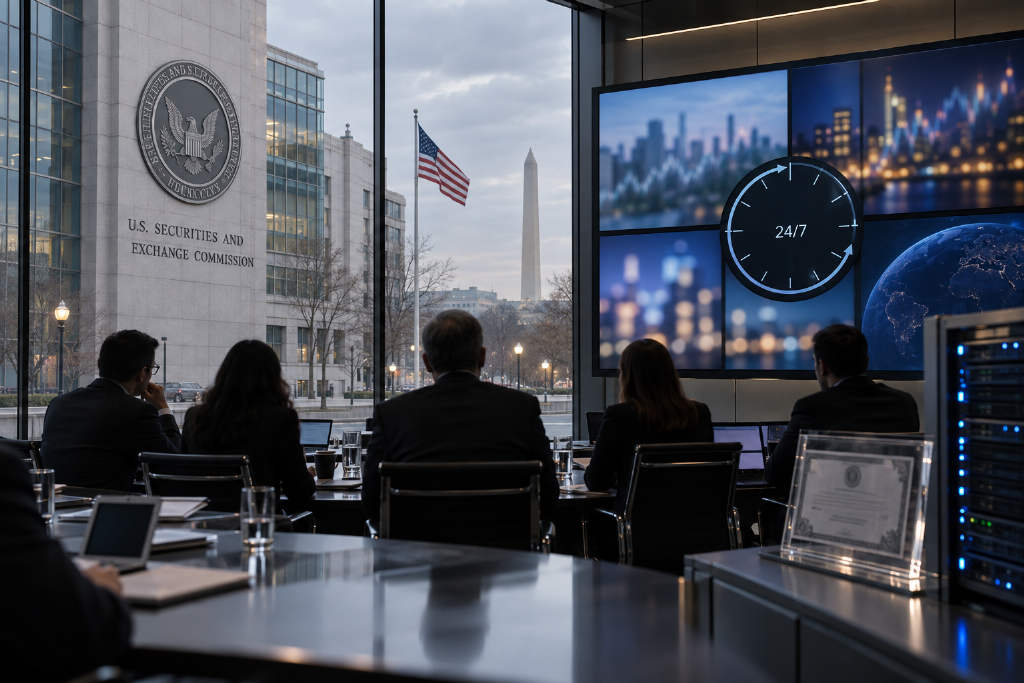
SEC2026-09-19 10:03:33SEC Weighs 24/7 Stock Trading as Atkins Ties Market Hours to Tokenization PushThe U.S. Securities and Exchange Commission held a roundtable in Washington on Thursday to discuss extending U.S. stock trading beyond traditional hours and into overnight and holiday sessions, a move that would bring equities closer to the around-the-clock rhythm long seen in crypto markets. SEC Chair Paul Atkins linked that discussion to the agency’s newly issued innovation exemption for tokenized securities, saying blockchain-based systems could improve real-time inventory management, raise efficiency, and reduce settlement failures. He also said the SEC is reviewing how to balance a growth-friendly framework with protections against market misconduct. Commissioner Hester Peirce summed up the comparison bluntly, telling attendees that crypto markets do not sleep. At the same time, she flagged practical concerns tied to longer trading hours, including wider spreads, sharper price swings, less time to handle technical issues, and more difficult surveillance. Atkins said several necessary preparations are already underway or completed, indicating the agency has moved beyond theory and begun work tied to both regulatory and market-structure changes.360
Dell Technolo2026-09-14 15:40:16AI stock sell-off hits Dell as Michael Dell loses $15.1 billion in a dayDell Technologies came under pressure Monday as a broader sell-off in AI-related stocks pushed the company’s share price down more than 6% at one point, according to market data cited by BIT (Bit.com). The drop cut founder Michael Dell’s net worth by $15.1 billion, leaving him with $261.4 billion and moving him from No. 2 to No. 4 on Forbes’ real-time billionaire list, behind Elon Musk, Larry Page and Jeff Bezos. The reversal followed a powerful run tied to enthusiasm around AI data center spending. Dell shares had previously climbed as much as about 321% this year. The company’s Sept. 1 earnings report showed second-quarter revenue of $47 billion, up 58% year over year, while revenue from AI-optimized servers doubled to $16.4 billion. Dell also raised its outlook for AI-optimized server revenue, saying it now expects the figure to reach $74 billion in fiscal 2027, above an earlier projection of $60 billion. The move in Dell shares came as AI names broadly weakened. BlockBeats said recent calls from Anthropic CEO Dario Amodei and OpenAI CEO Sam Altman to slow the development of frontier AI prompted investors to reassess AI capital spending and infrastructure demand. On Monday, Nvidia fell more than 3%, AMD dropped more than 5.5%, Intel lost 5.5%, SoftBank closed down more than 10%, while ASML and Samsung also moved lower.890